
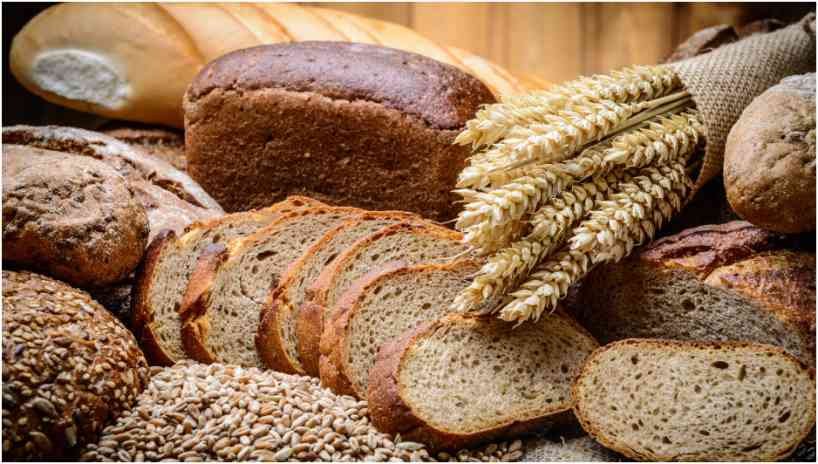
A loaf can look dark, rustic, and healthy while still starting with refined flour. When readers ask me How to choose whole grain bread at the store, I tell them to ignore the bread’s color and turn the package around.
The strongest loaf is not always the most expensive one or the bread covered with visible seeds. I use a 30-second “Front, First, Fiber, Finish” test to separate meaningful nutrition from clever packaging.
How to Choose Whole Grain Bread at the Store in 30 Seconds
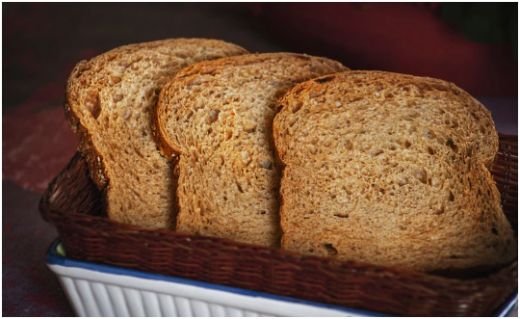
Front: Read the Claim but Do Not Trust It Yet
Start with packages marked “100% whole grain” or “100% whole wheat.” These claims are more useful than “multigrain,” “wheat,” or “made with whole grains.”
However, the front panel is only your first filter. The ingredient list must support the marketing claim.
First: Find the First Grain Ingredient
The first grain ingredient should contain the word “whole.” Strong examples include whole wheat flour, whole rye flour, whole oats, and whole-grain barley flour.
The FDA considers a grain whole when its bran, germ, and endosperm remain in the same relative proportions as the intact kernel. FDA guidance also recommends checking whether the first or predominant ingredient is a whole grain.
Fiber: Compare Equal Serving Sizes
Compare labels using the same number of slices. One company may provide nutrition information for one slice, while another uses two.
I aim for about 3 grams of fiber per slice when possible. This is a practical shopping target rather than a legal definition of whole-grain bread.
Finish: Break Ties With Sugar and Sodium
After checking the grain base and fiber, compare added sugar and sodium. I favor bread with about 2 grams or less of added sugar per slice and roughly 150–180 milligrams of sodium or less.
This order is the fastest way to understand How to choose whole grain bread at the store without letting the package design control your decision.
Decode Whole-Grain Claims Before They Fool You
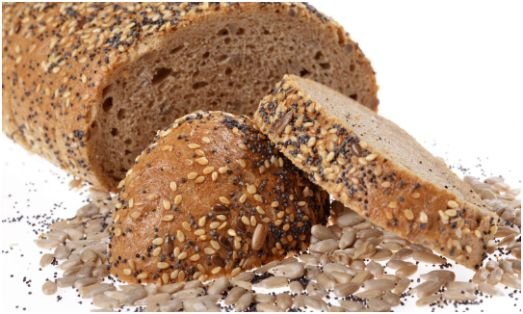
“Multigrain” means the product contains more than one grain. It does not mean those grains are whole. A loaf could combine refined wheat, corn, and oats while still using the term.
“Made with whole grains” confirms that some whole grain is present. It does not guarantee that every grain ingredient is whole.
“Wheat bread” can also begin with ordinary refined wheat flour. The word “wheat” is not the same as “whole wheat.”
Therefore, How to choose whole grain bread at the store cannot be answered by reading the largest words on the bag. Always confirm the claim through the ingredients.
Read the Ingredient List Like a Buyer
Look for whole wheat flour, whole rye flour, whole oats, or another named whole grain near the beginning.
Be cautious when the first flour appears as:
- Wheat flour
- Enriched wheat flour
- Enriched flour
- Unbleached flour
These terms indicate refined flour unless the label specifically includes the word “whole.”
Food ingredients are listed in descending order by weight. The ingredient used in the greatest amount appears first, followed by ingredients used in smaller amounts.
Do not reject an otherwise suitable bread because it contains yeast, salt, vinegar, oil, or a small amount of sweetener. Concentrate on the grain base first.
My ingredient rule for How to choose whole grain bread at the store is straightforward: “whole” should appear early and clearly, especially when several flours are listed.
Use the Nutrition Facts Panel to Compare Loaves
The Nutrition Facts panel helps you compare similar breads, but it cannot prove that a product is whole grain. Fiber can also come from added ingredients, so check the ingredient list before comparing the numbers.
Look for Meaningful Fiber
The FDA Daily Value for dietary fiber is 28 grams for a 2,000-calorie diet. As a general label-reading rule, 5% Daily Value or less is considered low, while 20% or more is considered high.
A loaf providing around 3 grams per slice makes a useful contribution. If the serving size is two slices, look for approximately 6 grams.
However, do not let an impressive fiber number replace the ingredient test. Confirm that whole grains appear near the beginning.
Check Added Sugar, Not Just Total Sugar
Read the “Includes Added Sugars” line rather than relying only on total sugars. Added sugars must be shown separately on current US Nutrition Facts labels.
A practical target is 2 grams or less per slice. Still, a refined loaf with zero added sugar does not automatically beat a genuine whole-grain loaf with one gram.
Grain quality remains the first test.
Compare Sodium Per Slice
The FDA Daily Value for sodium is 2,300 milligrams.
Bread can add considerable sodium because a sandwich normally uses two slices. A difference of 70 milligrams per slice becomes 140 milligrams in one sandwich.
When two loaves have similar whole-grain ingredients and fiber, choose the lower-sodium option.
These comparisons turn How to choose whole grain bread at the store into a repeatable process instead of a search for one perfect number.
Ignore Brown Color and Read the Whole Grain Stamp
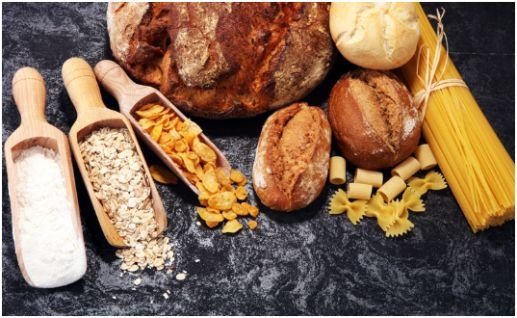
Brown bread is not automatically whole grain. Ingredients such as molasses, caramel coloring, malt, or brown sugar can create a darker appearance. A pale loaf can also use genuine whole-grain flour.
Trust the wording on the back rather than the shade of the bread.
The Whole Grain Stamp can provide additional evidence, but you must identify which version appears on the package.
The 100% Stamp means every grain ingredient is whole grain. It also requires at least 16 grams of whole grain per labeled serving.
The 50%+ Stamp and Basic Stamp confirm that a product contains whole grain. However, they do not promise that all its grain ingredients are whole.
For How to choose whole grain bread at the store, consider the 100% Stamp strong supporting evidence, but still verify the ingredients.
Compare Two Loaves With a Worked Shelf Example
Imagine two loaves sitting beside each other.
Loaf A says “12 Grain,” looks dark, and displays seeds through the bag. Its first ingredient is enriched wheat flour. One slice contains 2 grams of fiber, 3 grams of added sugar, and 190 milligrams of sodium.
Loaf B looks lighter and says “100% Whole Wheat.” Whole wheat flour is the first ingredient. One slice contains 3 grams of fiber, 1 gram of added sugar, and 150 milligrams of sodium.
I would choose Loaf B.
Loaf A wins the beauty contest, but Loaf B wins the label test. This example shows How to choose whole grain bread at the store without becoming distracted by color, grain counts, visible seeds, or rustic branding.
Handle Sprouted, Sourdough, and Gluten-Free Bread
Sprouted bread can be a suitable choice, but “sprouted” does not automatically mean 100% whole grain. Check whether the first grain ingredient is explicitly described as whole.
Sourdough refers to the fermentation method rather than the type of flour. A sourdough loaf may use refined white flour, whole-grain flour, or a mixture.
Gluten-free bread requires extra attention because some products rely heavily on tapioca starch, potato starch, or refined rice flour. Whole-grain gluten-free options may include brown rice, sorghum, buckwheat, quinoa, millet, or certified gluten-free oats. The FDA recognizes grains such as sorghum, buckwheat, millet, quinoa, rice, oats, and rye as whole grains when their essential components remain intact.
The same method used for How to choose whole grain bread at the store works across other packaged-food aisles. Compare breakfast cereals by nutrition label before choosing your next breakfast box.
Your Cart Deserves Better Than Beige Marketing
Stores make How to choose whole grain bread at the store appear harder than it really is. Packages advertise seeds, ancient grains, protein, and “natural” ingredients, while the most useful evidence sits in small print.
Turn the loaf around. Confirm that a whole grain comes first, compare fiber using equal serving sizes, and then check added sugar and sodium.
Give the 100% Whole Grain Stamp extra credit, but never allow brown color to make the final decision. Your next sandwich deserves evidence, not a loaf wearing a healthy-looking costume.
Frequently Asked Questions
1. How to choose whole grain bread at the store for more fiber?
Choose bread with a named whole grain first and aim for around 3 grams of fiber per slice.
2. Is multigrain bread the same as whole-grain bread?
No. Multigrain means several grains are present, but some or all may be refined.
3. What should the first ingredient in whole-grain bread be?
It should name a whole grain, such as whole wheat flour, whole rye flour, or whole oats.
4. Is 100% whole wheat bread considered whole grain?
Yes. Whole wheat flour retains the bran, germ, and endosperm of the wheat kernel.