I once assumed flexibility required advanced yoga or long training sessions. What helped me more was a short routine I could repeat after waking. These morning stretches to improve flexibility move the spine, hips, shoulders, hamstrings, and calves without making the start of the day feel like a demanding workout.
The sequence takes about ten minutes and needs no special equipment. A chair, wall, cushion, or folded towel can make it more comfortable. Move slowly, breathe normally, and aim for mild tension rather than pain.
Why Morning Stretching Helps
The body may feel stiff after remaining in similar sleeping positions for hours. Gentle movement can restore comfortable range of motion and prepare the muscles and joints for daily activity.
A useful routine combines dynamic mobility with short static holds. Dynamic warm-ups take joints through a controlled range, while static stretches hold one position. Starting with light movement before deeper holds often feels better than forcing cold muscles into a long stretch.
Consistency matters more than intensity. A short routine performed regularly is more practical than an occasional session that causes soreness.
Pairing regular movement breaks with healthy screen time habits that reduce digital fatigue may also ease the stiffness and tension associated with spending long periods using phones, computers, and other digital devices.
A 10-Minute Morning Flexibility Routine
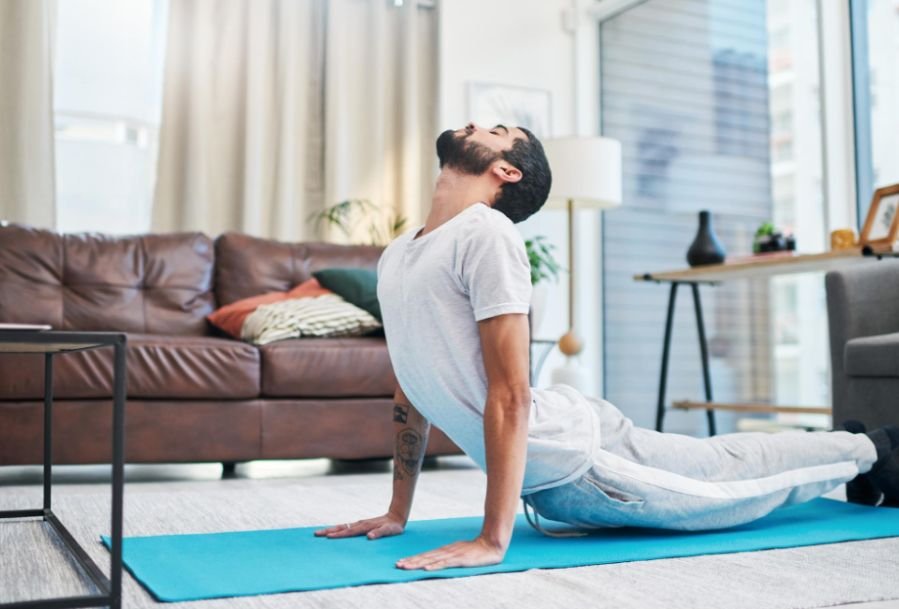
1. March and Circle Your Arms
March gently in place for 60 seconds. Let your arms swing, then add shoulder circles that gradually become larger. Keep your breathing easy and ribs relaxed. This warms the body before deeper stretching.
2. Cat-Cow Movement
Come onto your hands and knees. Inhale as you lift your chest and tilt your pelvis. Exhale as you round your back and draw your belly inward.
Complete six to eight slow repetitions. Put a towel under your knees if needed, or perform the movement seated by alternating between arching and rounding your spine.
3. Thread-the-Needle Stretch
From your hands and knees, perform the thread the needle stretches by sliding your right arm beneath your left until your shoulder approaches the floor. Keep your hips above your knees. Hold the position for 20 seconds, then change sides.
This movement targets the upper back and rear shoulders, which may feel tight after sleeping or prolonged screen use.
4. Low Lunge
Step your right foot forward from a kneeling position. Keep the front knee above the ankle and move your pelvis gently forward until you feel the front of the left hip stretch.
Hold for 20 to 30 seconds, then switch sides. Avoid arching your lower back. Use a chair for support when necessary.
5. Half-Split Hamstring Stretch
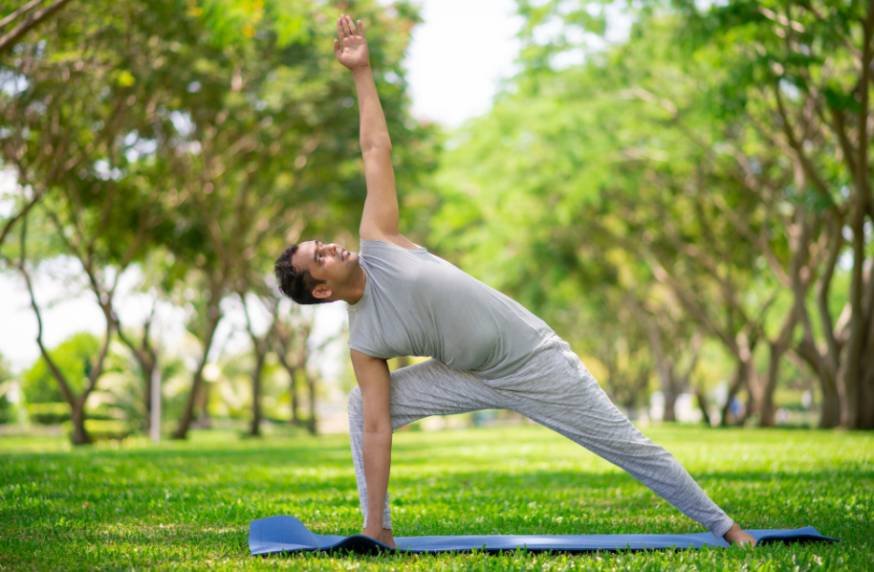
From the low lunge, shift your hips backward and straighten the front leg comfortably. Keep a slight bend in the knee and lengthen your spine.
Hold for 20 seconds per side. This is one of the most useful morning stretches to improve flexibility in the backs of the legs, particularly for people who sit for long periods.
6. Seated Figure-Four Stretch
Sit near the front of a stable chair. Place your right ankle over your left thigh and lean forward from the hips without rounding your back.
Hold for 20 to 30 seconds, then switch sides. You should feel the outer hip and glute area stretching. Keep the crossed foot lower if the position feels too intense.
7. Child’s Pose With Side Reach
Bring your hips toward your heels and reach forward. Walk both hands slightly to the right to stretch the left side of your body. Return to the centre and repeat in the opposite direction.
Hold each side for 20 seconds. Use a cushion between your hips and heels, or perform the reach while seated if kneeling feels uncomfortable.
8. Standing Calf Stretch
Face a wall and place both hands against it. Step one foot backward, press the heel down, and keep the toes pointing forward. Bend the front knee while keeping the back leg long.
Hold for 20 to 30 seconds on each side. Slightly bending the back knee shifts the stretch lower toward the Achilles area.
How to Progress Safely
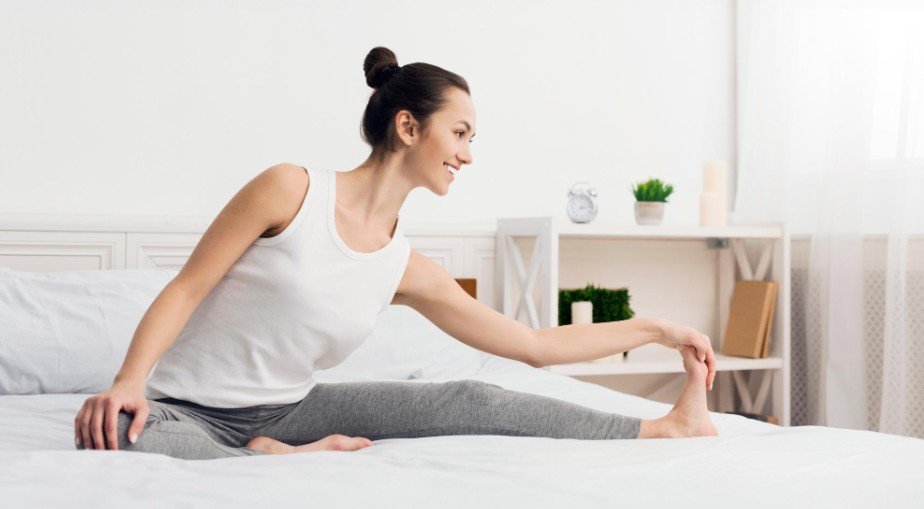
Beginners should use a smaller range of motion, shorter holds, and stable support. Bent knees are acceptable during hamstring stretches, and a chair can replace many floor positions. Flexibility is not determined by how closely your pose resembles someone else’s.
Combining this routine with walking workouts for weight management can also create a balanced movement plan that supports mobility, cardiovascular fitness, and consistent daily activity.
After several comfortable sessions, add five seconds to each hold. You can also repeat the tightest movement or practise the routine five days per week. Avoid bouncing, holding your breath, or pushing through sharp discomfort.
Track one movement, such as how comfortably you can reach toward your shins. Check it again after two weeks under similar conditions. Small changes may be easier to recognise when you use the same position and technique each time.
Frequently Asked Questions
1. Can morning stretches to improve flexibility work in ten minutes?
Yes. A focused ten-minute routine can support gradual progress when practised consistently. Results depend on your current mobility, technique, activity level, recovery, and regularity.
2. Should I stretch immediately after waking?
Start with about one minute of light movement before performing longer holds. Marching, shoulder circles, ankle movements, or gentle spinal motion can help your body transition from rest.
3. How long should I hold each stretch?
Hold a comfortable position for approximately 20 to 30 seconds. Beginners can start with 10 to 15 seconds and gradually increase the time as the movement becomes easier.
4. Can I complete the routine without using the floor?
Yes. Cat-cow, side reaches, hip stretches, and hamstring movements can all be adapted to a chair or standing position. A wall can provide additional balance and support.
5. Should morning stretches feel uncomfortable?
You may notice gentle pulling or tension, but stretching should not cause sharp pain, tingling, numbness, or joint discomfort. Reduce the range or stop the movement when something does not feel right.
Final Thoughts
I have found that flexibility becomes easier to develop when the routine is simple enough to repeat without hesitation. Ten calm minutes can build awareness of tight areas and make everyday movement feel less restricted.
I would focus on comfort, consistency, and gradual progress rather than chasing the deepest possible position. Start with supported variations, track one movement for two weeks, and allow your range of motion to improve at its own pace. A routine you can maintain will always be more valuable than an intense session you rarely repeat.